Hello my TraceysTrek family!
Yesterday I was looking back at all the climbing hidden inside a walk around Britain’s coast. Almost twelve Everests’ worth of recorded ascent, one cliff, headland and steep coastal path at a time.
Today I’m setting off for the foothills of the Himalayas. Apparently, my response to discovering just how much climbing I’d done was to pack my boots and find some more!
From the coast to the Himalayas
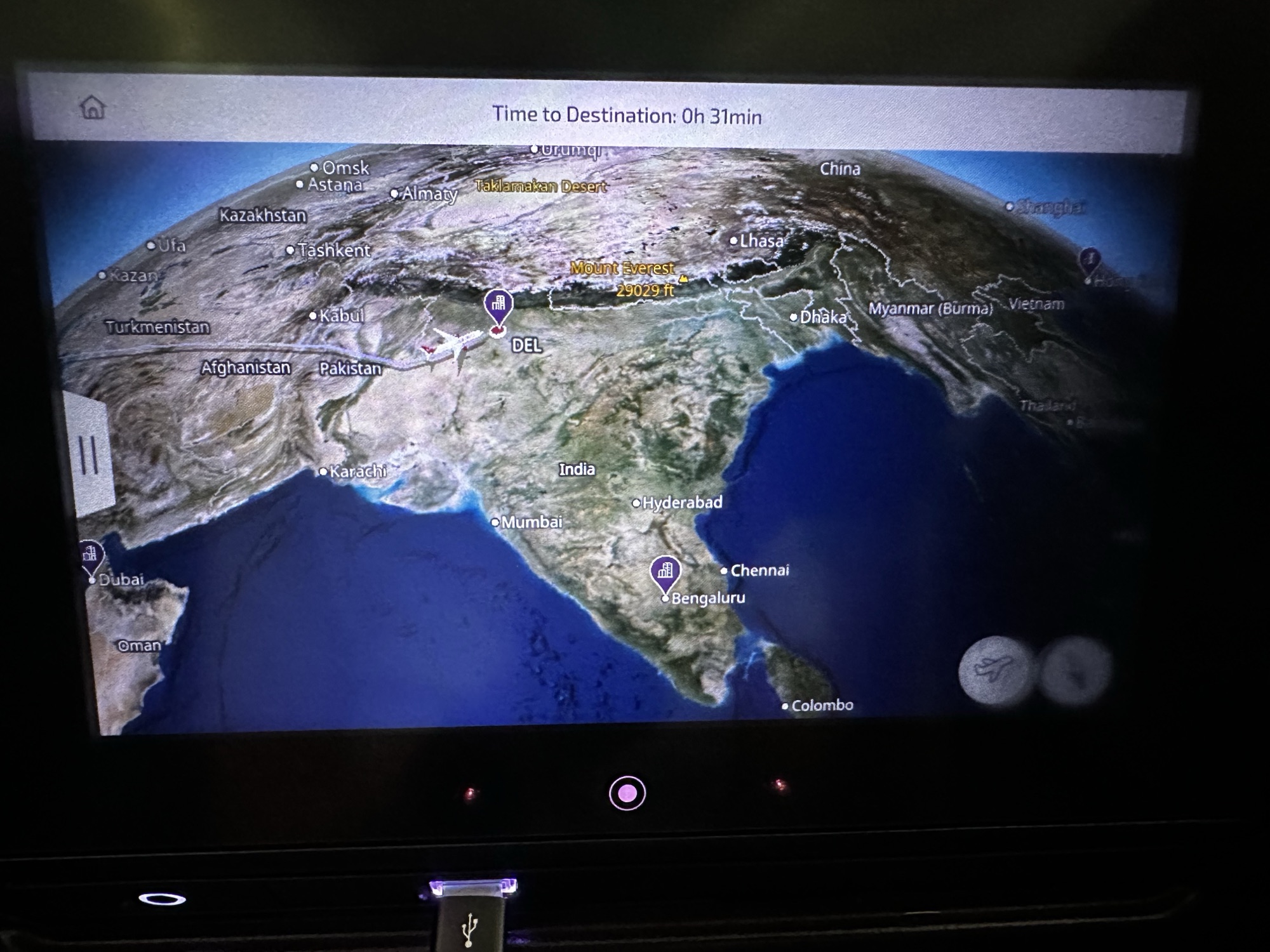
I’m heading to India for Discover Adventure’s Dalai Lama Mountain Trek, followed by the Golden Triangle extension. Two very different parts of India, and one rather compact collection of luggage.
Here’s where the two parts of the trip sit. The trek is in northern India, west of Nepal, on the southern side of the Himalayas. The Golden Triangle and Ranthambore are farther south, around Delhi, Agra and Jaipur. Kathmandu is shown simply to help put Nepal in context.

The trekking route begins at McLeod Ganj, near Dharamshala, and heads into the Dhauladhar foothills. Villages, forest paths and mountain views will replace the coast.

The plan — and a few more ups and downs
After arriving in Delhi, the plan takes us by train to Pathankot and on to McLeod Ganj. The five walking days are outlined below, using Discover Adventure’s published itinerary.
10 November: McLeod Ganj → Kareri
6–8 hours; camp 1,985 m / 6,513 ft. Net rise: 225 m / 738 ft.
11 November: Kareri → Bahl
5–7 hours; camp 2,100 m / 6,890 ft. Net rise: 115 m / 377 ft.
12 November: Bahl → Triund
5–6 hours; camp 2,850 m / 9,350 ft. Net rise: 750 m / 2,461 ft.
13 November: Triund → Laka Got → Triund
5–7 hours; high point 3,200 m / 10,499 ft. Rise of 350 m / 1,148 ft to Laka Got, then return to Triund.
14 November: Triund → McLeod Ganj
3–4 hours; finish 1,760 m / 5,774 ft. Net descent: 1,090 m / 3,576 ft.
*These are differences between the stated elevations, not full daily ascent totals. Any extra dips and climbs will add more. The itinerary and approximate dates may change.
The elevation differences alone imply at least 1,440 metres / 4,724 feet of climbing across those stages. I’ll have to see what the actual walking adds up to!
Laka Got is the planned high point; after that day’s climb, we return to sleep at Triund. This time the climbing comes with altitude too.
One bag, two very different climates
Packing for India doesn’t simply mean packing for warmth. I need clothes for sunny sightseeing days and for sitting still in a mountain camp after the sun has gone down. That is quite a change of temperature for the same small collection of kit!
Lower foothills and McLeod Ganj: a rough November planning range of 15–20°C by day and 5–10°C at night. Layers I can take off while walking, then put back on when we stop.
Higher trekking ground and Triund camp: I’m allowing roughly 5–12°C by day and −5 to +5°C overnight as a broad packing estimate. Exposed ground can feel colder in the wind. This is where my thermal layers, fleece, insulated jacket, hat, gloves and Rab Neutrino 600 sleeping bag earn their space.
Golden Triangle sightseeing: November average daytime highs in Delhi, Agra and Jaipur are around 28–30°C, with average overnight lows around 13–15°C. Quick-dry tops, lightweight trousers, a sunhat and sunglasses suit the warmer days; I’ll still want a layer for early starts, evenings and the wildlife outing.
So the waterproof jacket doubles as a windproof layer, the thermals are for the cold end of the trip, and the lighter clothes cover the warm end. The trick is to combine layers rather than pack a separate wardrobe for every place. Minimal packing still has to do quite a lot of work!
These are seasonal estimates for packing, not a forecast or guaranteed limits. The upper-camp range is a broad allowance informed by local operator November guidance; actual conditions may be colder. City figures are rounded from India Meteorological Department 1991–2020 climate normals. Local forecasts and the trek team’s advice will guide decisions on the trip.
Mum, a checklist and a floor full of kit
Last week I got Mum involved in the packing. I gave her the checklist while I got everything out on the floor. She was amazed at how it all fitted into my bags.

Looking at the kit laid out in the next photograph, you can understand why. Spread out like that, it seems quite a collection. Sleeping bag, layers, boots, poles, snacks and all those little essentials that somehow need to find a home.

Then came the satisfying bit: getting it into the bags. At the last weigh-in, the duffel was 11.6 kg and the rucksack 6.1 kg — 17.7 kg combined. The duffel figure includes my trekking poles.

What’s on my minimalist packing list?
The checklist has to cover trekking, camping and the Golden Triangle sightseeing afterwards. Here is the plan, with my sleeping bag and poles added to the essentials:
- Bags: soft duffel, daypack with waterproof protection, two packing cubes, laundry bag and valuables pouch.
- Clothing: three quick-dry T-shirts, one long-sleeve top, one smarter top, two pairs of trekking trousers and one lightweight sightseeing pair; thermal top and leggings, fleece, insulated jacket and waterproof jacket.
- The small clothing essentials: five pairs of underwear, two bras, sleepwear, three pairs of walking socks and two everyday pairs; warm hat, gloves, buff, sunhat, sunglasses and a lightweight temple scarf.
- Footwear: worn-in trekking boots, comfortable sightseeing shoes and flip-flops or sliders.
- Trekking and sleeping: Black Diamond Trail Cork poles, Rab Neutrino 600 sleeping bag, hydration system, headtorch and small quick-dry towel.
- Wash kit and essentials: small toiletries, sunscreen and lip balm, blister care, personal first-aid and medication, insect repellent, sanitiser and tissues.
- Snacks: six energy or fruit-and-nut bars, three mini flapjacks, 300 g mixed nuts, 150–200 g dried fruit, quick-energy sweets, six electrolyte sachets or tablets, mints and a couple of treats.
- Documents and electronics: passport, visa, insurance and travel details, cards and cash; phone, charging cables, power bank, plug adaptor and offline document copies.
Minimalist clearly still leaves room for snacks. There are some packing decisions I’m very happy with!
And then, the Golden Triangle
Once the trekking is over, I’m staying on for the Golden Triangle extension. The published Taj and Tigers itinerary takes in Delhi, Agra and Jaipur, including the Taj Mahal and Amber Fort, plus a wildlife outing in Ranthambore National Park. A tiger sighting would be a bonus, never a promise!
It means that the same bags have to take me from mountain camps to city sightseeing. Mum has seen the evidence: it really can all fit.
Yesterday’s post was about where my legs have already taken me. This one is about where they’re taking me next. New paths, a different landscape and more adventures to share.
Thank you for coming along with me.
Tracey x
Route and camp elevations: Discover Adventure; feet converted and rounded. Map terrain: Mapzen / AWS Terrain Tiles; approximate place positions: © OpenStreetMap contributors. The route line is illustrative and is not for navigation.

Leave a Reply